




Introduction
Mental health is a hot topic in today’s world. Mental health issues take many forms including stress, burnout, and depression. These issues have become more widespread in our current social media-centered world due to the demands of a fast-paced work environment and an unrelenting work culture. Fortunately, as new issues arise, new technologies have the potential to offer solutions.
Mental Health Tech News encompasses anything and everything pertaining to digitally based tools, apps, and platforms that have been developed and can be used to improve mental wellness. These tools can be anything from stress trackers and wearables to AI-based therapy chatbots. Technology can enhance the public’s understanding of mental health, as well as the ways in which it can be tracked and improved.
This article aims to discuss the advancements in mental health technology, the benefits of these advancements, the tools we have access to today, and the potential of the future of digital wellness.
The Growth of Mental Health Technology
Mental health solutions are no longer limited to therapy rooms. They can now be accessed via cellphones, smartwatches, and even virtual reality headsets.
The growth of mental health technologies can be attributed to many factors, one being accessibility. Therapy is not an option for some people, be it due to a lack of funds or being uncomfortable with the in-person setting. Mental health technologies offer a solution that is affordable and allows for privacy and instantaneous support.
Another contributing factor is the abundance of mental health tech news. The increase in these forms of mental health technologies has resulted in more people being willing to use a digital means of support. This is largely due to the increased public awareness and education of mental health technologies.
Mental health technology encompasses tools that assist with:
- Managing stress
- Tracking anxiety
- Reading depressed users
- Better restorative sleep
- Emotional Well-Being Tracker
Changing Mental Health Care
Rather than going head-to-head with therapists, technology complements therapists and expands the market for mental health care. Digital solutions let people monitor their feelings and receive help when and where they want.
Mental Health and the Role of AI
The world of mental wellness is seeing major AI advancements. AI chatbots provide a new option to fulfill the demand for virtual therapy.
They are especially valuable to:
- Those in crisis
- Individuals who lack access to a therapist
- People who want to check in emotionally on a daily basis
AI is also being used to interpret deviations of normal patterns of behavior, sleep, and even conversations to determine when a person may be at risk for depression or stress.
Mental Health Mobile Apps
The app explosion has quickly become one of the largest segments of the mental health technology sector.
Mobile offerings may include:
- Meditation guides
- Mood checkers
- Calming breath work
- CBT exercises
- Journal prompts
The most popular apps are designed for sustained use and healthy habits.
Wearable Tech and Mental Wellness
Thinking of the future, who needs a therapist when you can just wear your Mental Health Tech News on your sleeve? Well, maybe more on your wrist or your smartwatch.
Wearable wellness tech can track:
- Stress (via heart rate variability)
- Sleep
- Exercise
- Breathing
Many devices provide users with a stress alert and guided breathing exercises. This feature has the propensity to help an individual self-regulate their anxiety before it becomes problematic.
VR Therapy
VR is a pioneering and advanced method of treating mental illness. Users can immerse themselves in soothing worlds, and therapists can utilize VR environments to conduct controlled setting exposure therapy.
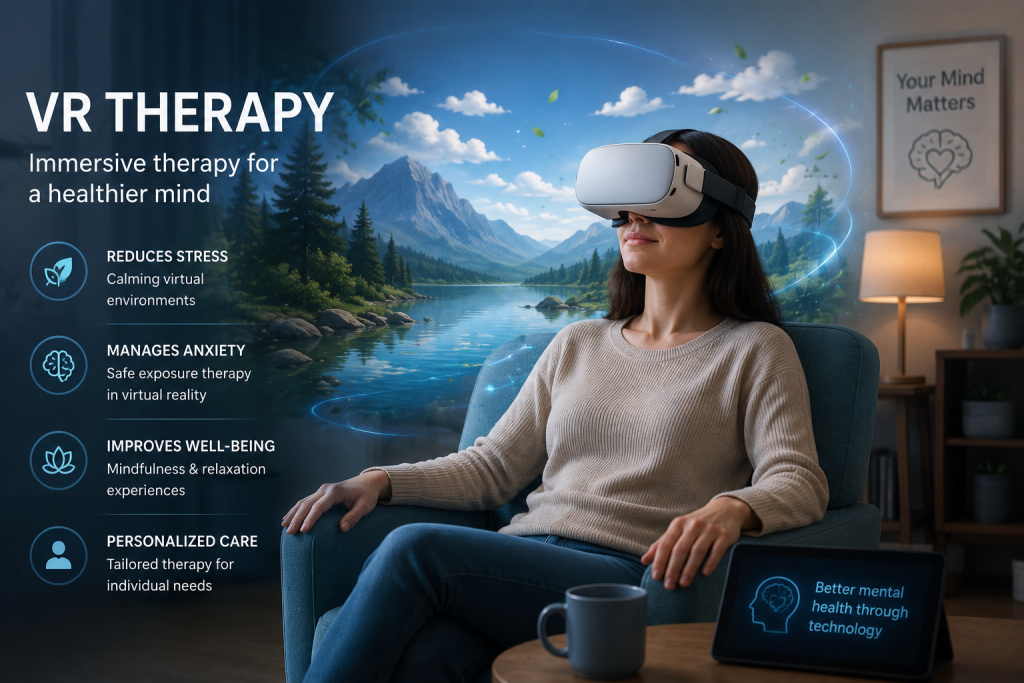
For VR therapy, this can include:
- Phobias (e.g. heights, flying)
- PTSD
- Anxiety
Therapy VR can:
- Improve therapy, by developing the ability to conduct real-world therapy sessions within safe and controlled settings, and
- Create real-life emotional therapy experiences
Benefits of Mental Health Tech
The consistent growth we see in Mental Health Tech News, through the perspective of the users, exhibits an abundance of benefits. We can see a massive modern upgrade to mental health care, where the future of mental health tech is user-oriented.
1. Support is Always Available
Mental health support can be accessed at any time through telehealth or mental health care apps. No appointments. No waiting.
2. More Comfort
Users feel more comfortable sharing in a virtual setting rather than meeting a therapist in their office.
3. Affordability
Transforming mental health care from an expensive service to a free or low-cost service in a digital format.
4. Prevention is Possible
By using technology, a user has the ability to identify anxiety or other stress symptoms, and take action to avoid those challenges in the future.
5. Customization
Behavioral and wellness apps can offer suggestions tailored for the user.
Challenges in Mental Health Tech
Efforts to address the challenges that accompany any new technology are critical.
Data safety is a primary concern in mental health tech. Because mental health conditions are sensitive, users need to trust that their data is safe.
Another challenge is the ability to provide an accurate response. AI tools are a value-added service, but cannot replace the human therapist and many times will misinterpret emotions.
Anxiety may occur when man over relies on technology rather than cultivating human relationships to fill emotional voids.
Future of Mental Health Tech News
The outlook of mental health technology is positive. The public is expecting fast improvements and the adoption of digital Mental Health Tech News strategies to be more personalized.
Some advancements that may occur are:
- AI therapists that can identify and respond to human emotions
- Wearable devices with advanced brain scanning technology
- Completely immersive VR therapy sessions
- Mental health application tools embedded in social media platforms
- Predictive analytics for mental health
Emotional support for mental health may soon be as popular and as widely used as physical health support.
Mental Health Technology in Action
Mental health technology strives to meet the needs of the public. Exam stress is managed using meditation apps, while wellness platforms help employees manage work stress. Digital tools are making a positive impact on hospital therapy.
Research studies have shown that mental health apps used consistently can help reduce anxiety and improve sleep in patients in a matter of weeks.
The people that have doubted that mental health technology can have a positive, meaningful impact on mental health have now been silenced as the need for mental health technology has never been greater than it is now.
Conclusion
The future of mental health technology is promising and positive, as mental health technology has the potential to be widely available and customized to the needs of the individual. Mental health technologies work in synergy with care. They provide individuals with the support that they need and enhance traditional care.
AI chatbots, wearable stress devices, and VR therapy are technologies that not only help individuals understand their mental health, but help them take control of their mental health.
As the public becomes more educated, mental health technologies will be integral to developing a more health-conscious and equitable community.
FAQ Section
What is mental health tech news?
News related to mental health tech encompasses the latest news, modernizations, and new technologies concerning the digitization of tools that assist and promote mental and emotional health.
Are mental health apps effective?
Mental health apps can be effective for stress reduction and management, meditation, and mood tracking, but would need to be utilized consistently.
Can AI replace therapists?
AI has the ability to replace the lowest tier of therapists, and can assist in offering rudimentary care and management, but cannot fill the role of a therapist.
Is mental health technology safe?
The majority of mental health platforms are safe, but it is the user’s responsibility to verify the privacy policy for the platform before disclosing personal information.



[…] when you find an affordable option, additional treatment may affect the final […]